A free editorial guide from riodejaneiro.app. Use it to build your itinerary; Rio Pulse’s personalised plans are still in development.
Millions on one beach, a plan for getting home
New Year’s Eve in Rio de Janeiro: Réveillon in Copacabana, traditions and logistics
Réveillon in Copacabana is one of the largest free New Year’s parties in the world, and it works very differently from an ordinary night out. Roads close, the metro runs on special tickets and the beach fills hours before midnight. The celebration itself is easy to enjoy; the logistics around it are what need planning.
Quick answer
Rio’s main New Year’s Eve party is the free Réveillon on Copacabana beach, with music stages and fireworks launched from barges at midnight. Wear white, arrive in the early evening, carry little and plan the journey home first. Avenida Atlântica closes to traffic, and in recent years the metro has required a special pass bought in advance, so check the current MetrôRio and city announcements.
What Réveillon in Copacabana is like
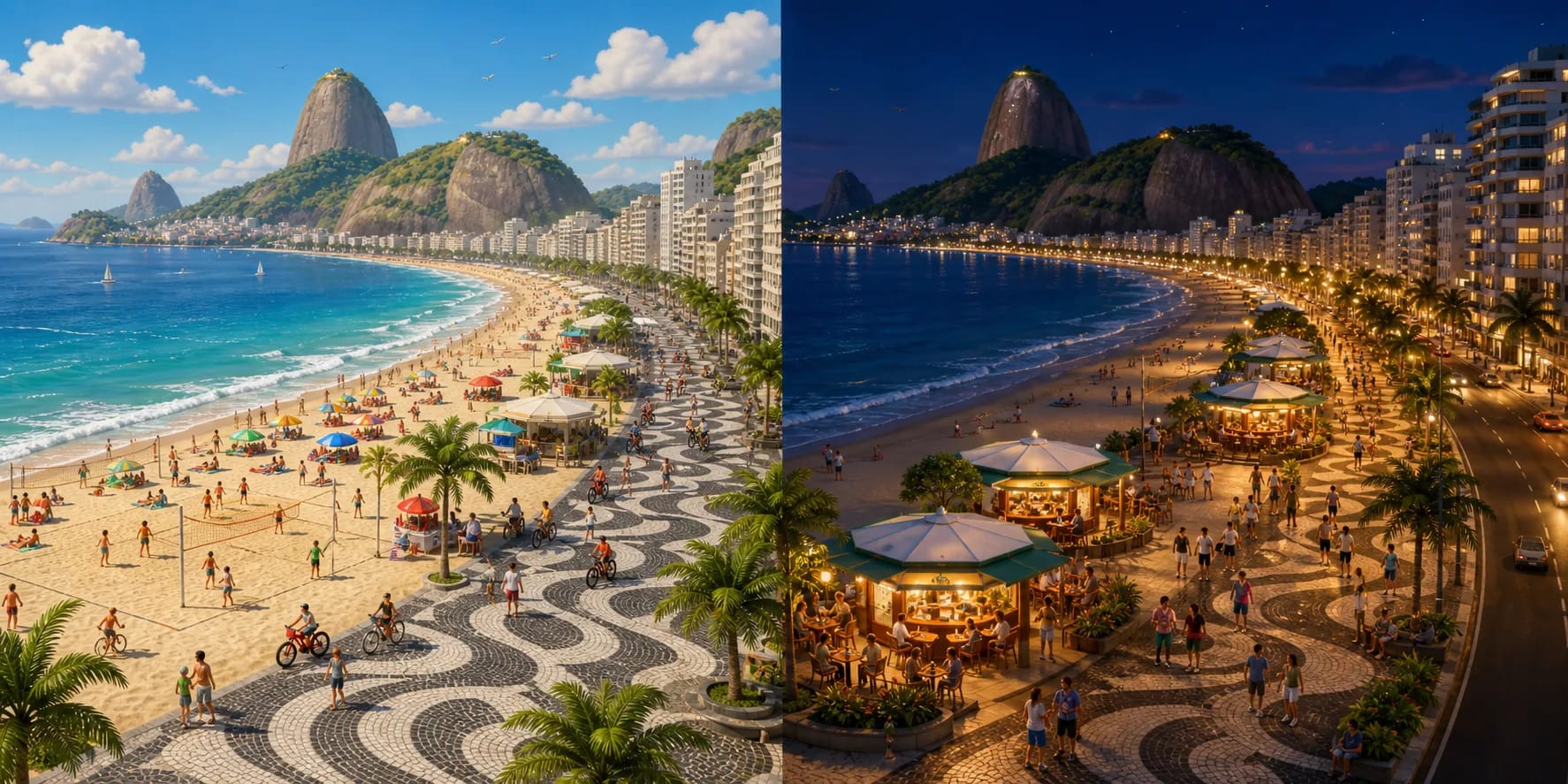
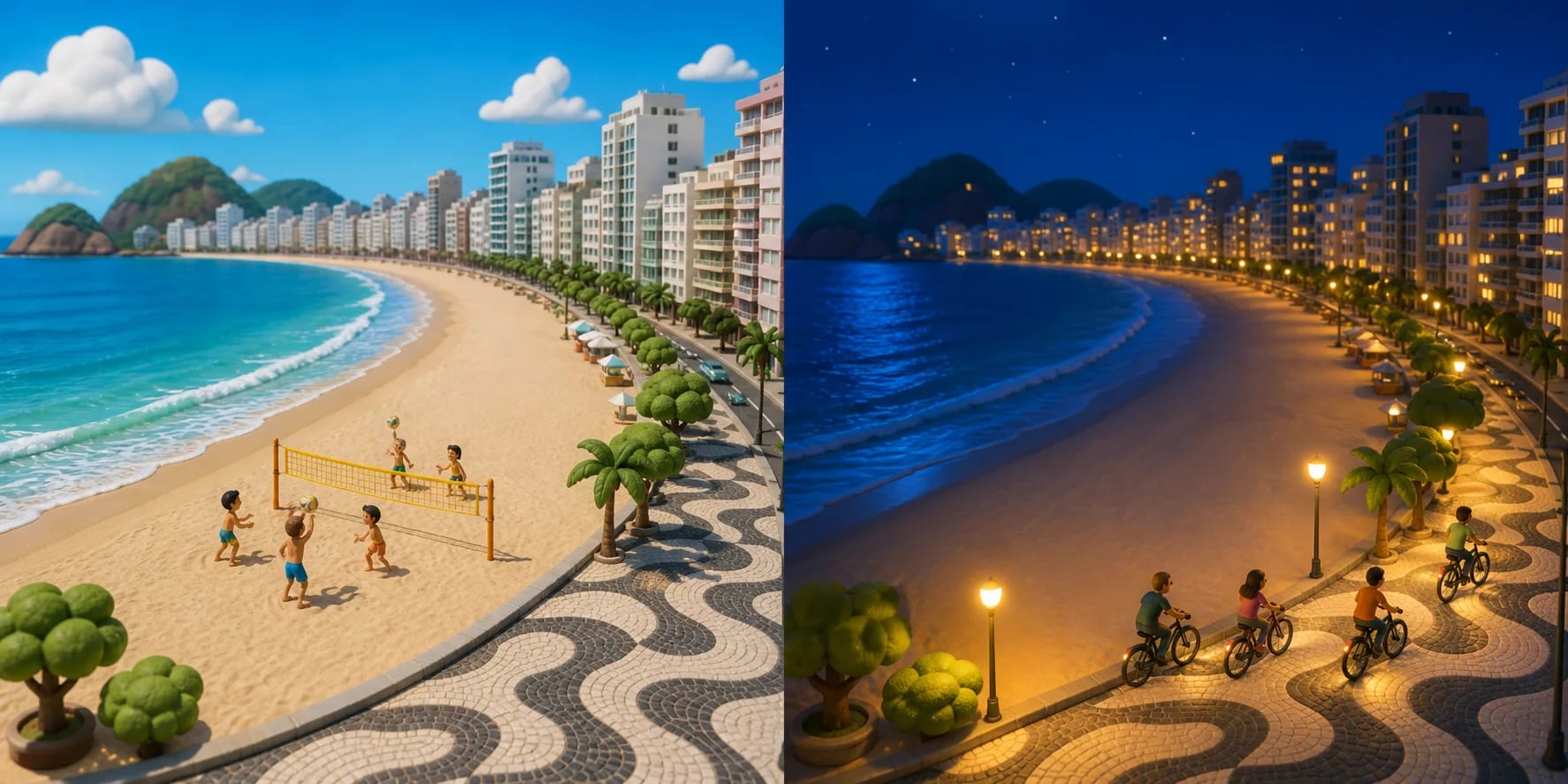
The main party takes over the whole length of Copacabana, from Leme to the Forte de Copacabana. The city sets up music stages on the sand, and at midnight fireworks are fired from barges moored along the shore, so the display runs the full length of the bay rather than from one point. In recent editions the programme has also included a drone show. Line-ups, running order and the exact length of the display are announced by Riotur and the city each year, usually in the weeks before the event.
Copacabana is not the only official celebration. In the 2025–26 edition the city also ran fireworks in Flamengo, at the Igreja da Penha and in parks in the West Zone, plus stages in neighbourhoods such as Madureira, Ilha do Governador and Paquetá. The list changes from year to year, so check the official Réveillon Rio site for the current map. These secondary points are smaller, more local and generally easier to reach and leave, which matters more than most visitors expect.
Traditions: white clothes, seven waves and Iemanjá
Most people wear white, a custom associated with peace and a fresh start that has become the city’s unofficial dress code for the night. Some add a colour for a specific wish — yellow for money and pink for love are the common ones. At midnight many people walk to the water’s edge and jump seven waves, making a wish with each one. Others keep pomegranate seeds in their wallet or eat lentils for prosperity in the year ahead.
The white clothing and the offerings on the shore come from Afro-Brazilian religions, especially Umbanda and Candomblé, which honour Iemanjá, the orixá of the sea. Throughout the evening you will see flowers, candles and small boats placed in the surf, and groups gathered in ceremony. These are religious acts, not decorations: give them space, do not pick up or step over offerings, and ask before photographing people who are praying or making them.
- White clothes for peace; a coloured detail for a particular wish.
- Jump seven waves at midnight, one wish per wave.
- Flowers and offerings to Iemanjá are placed in the sea — leave them alone.
Where to watch: sand, kiosks, hotels or a boat
The free option is the sand itself. The area in front of the main stage is the most crowded, while stretches towards Leme or the Posto 6 end tend to be a little calmer, though nowhere on the beach is quiet. Arriving in the early evening lets you choose a spot near a landmark you can find again. For a view from above, the viewpoints guide covers places around the city, but check access rules for the night before relying on any of them.
Many beach kiosks and seafront hotels sell ticketed parties with food, drink, toilets and a controlled area, which is the main reason people pay for them. Read carefully what the price includes, how you enter once roads are closed and whether the event has the city’s permission. Watching from a boat is popular, but vessels are kept out of a safety zone around the firework barges: book only with an operator that is properly licensed and can show its authorisation from the maritime authorities.
- The sand: free, crowded and the most atmospheric option.
- Kiosk and hotel parties: paid, with toilets and a controlled area.
- Boats: check licensing, safety equipment and where the vessel may anchor.
Road closures, the metro and getting home
On 31 December Avenida Atlântica closes to traffic from the morning, tour buses and vans are barred from Copacabana, and in the evening general vehicle access to the neighbourhood is cut off. In recent years the metro has run a special operation in which the usual cards and contactless payment were not accepted during the evening and night; instead you needed a Réveillon pass with a QR code for the way in and a wristband for the way back, bought in advance online. Rules change, so check the current MetrôRio announcement, and see our metro map for stations.
Plan the return before you plan anything else. After midnight the stations fill quickly, some only open for exits or boarding at certain hours, and queues can last a long time. Many people simply walk to Ipanema or Botafogo before looking for transport, or wait on the sand until the crowds ease. Taxis and ride-hailing apps are scarce and expensive near the beach; meeting a car several blocks away usually works better. Our getting around guide explains the regular options.
- Buy the metro pass, if one is required, well before 31 December.
- Agree a meeting point with your group in case phones stop working.
- Expect long queues after midnight and consider walking part of the way.
Where to stay and when to book
Staying within walking distance of the beach removes the hardest part of the night, which is the journey. That is why rooms in Copacabana, Leme and Ipanema are among the most sought-after of the year. Many hotels and apartments impose multi-night minimum stays over the New Year period and ask for larger deposits or stricter cancellation terms, so read the conditions before paying. Rates are well above the rest of the year; our costs guide helps you set a realistic budget.
Book as early as you can, ideally many months ahead, and treat very cheap last-minute offers with caution. If you stay further away, in Botafogo, Flamengo or Barra, confirm how you would reach Copacabana once the roads close and, just as important, how you would get back. For a holiday rental, check with the host whether the building has rules for New Year guests, since some condominiums restrict access or visitors on the night.
What to carry and how to stay safe
Carry as little as possible: a copy of your identification, a phone, one card and some cash, kept in a front pocket or a small bag worn in front. Leave passports, jewellery and spare cards at your accommodation. Pickpocketing is the main risk in dense crowds, and the police set up checkpoints at access points where bags may be inspected. Glass is restricted on the seafront, so bring drinks in cans or plastic. Our safety guide has more on crowded events.
The night is hot and long, so drink water as well as alcohol, eat before you go and wear shoes you can walk home in. Public toilets are limited and queues are long; a paid party solves this, the sand does not. Agree a fixed meeting point with your group, because mobile networks often slow down around midnight, and write down an emergency number and the address of where you are staying.
- ID copy, phone, one card and a little cash — nothing else of value.
- Water, sunscreen for the afternoon and comfortable shoes.
- No glass bottles; cans or plastic instead.
- A charged phone and a fixed meeting point for the group.
Alternatives away from the biggest crowd
If millions of people on one beach sounds like too much, the city’s other official points are a real option. Parties in Flamengo or in the North and West Zones usually have their own fireworks, a more local crowd and easier transport, although they are still busy. Barra da Tijuca and Recreio hold their own gatherings along the beach, and our Barra and Recreio guide describes that side of the city. Check each year which locations the city has confirmed.
Another route is a private dinner or party. Restaurants, bars and clubs across the city sell New Year menus and events, often with fixed prices and advance booking; the nightlife guide is a good starting point. Some visitors watch from a rooftop or a friend’s apartment with a sea view, which avoids the crowd entirely. Whatever you choose, plan how you will get home, because traffic and transport are disrupted well beyond Copacabana.
Frequently asked questions
- Is New Year’s Eve in Copacabana free?
Yes. The beach celebration, the stages and the fireworks are free and open to everyone. You only pay if you choose a ticketed kiosk or hotel party, a boat trip or a restaurant event, and in recent years you also needed a special metro pass to travel by metro that night.
- What time should I arrive in Copacabana on New Year’s Eve?
Early evening is a sensible target if you want a good spot on the sand and to arrive before vehicle access to the neighbourhood closes. Arriving close to midnight means crowded streets and slow movement. Check the current closure times published by the city before deciding.
- Why do people wear white on New Year’s Eve in Rio?
White is associated with peace and a fresh start, and the custom comes largely from Afro-Brazilian religions that honour Iemanjá, the orixá of the sea. Today most people wear it regardless of religion, sometimes adding a colour linked to a particular wish for the new year.
- How does the metro work on New Year’s Eve in Rio?
In recent years MetrôRio has run a special operation in which normal cards were not accepted in the evening and night, and passengers needed a Réveillon pass bought in advance online, with a return wristband. The rules can change, so check MetrôRio’s announcement for the current year.
- Is it safe to spend New Year’s Eve in Copacabana?
There is a large police and municipal presence, but the crowd is enormous and pickpocketing is the main risk. Carry very little, keep your phone in a front pocket, stay with your group, avoid glass and plan the journey home before midnight.
Sources to check before you go
Opening hours, events and visiting conditions change. These are the official references used when reviewing this guide.