A free editorial guide from riodejaneiro.app. Use it to build your itinerary; Rio Pulse’s personalised plans are still in development.
The city only makes sense from above
The best viewpoints in Rio de Janeiro, free and paid
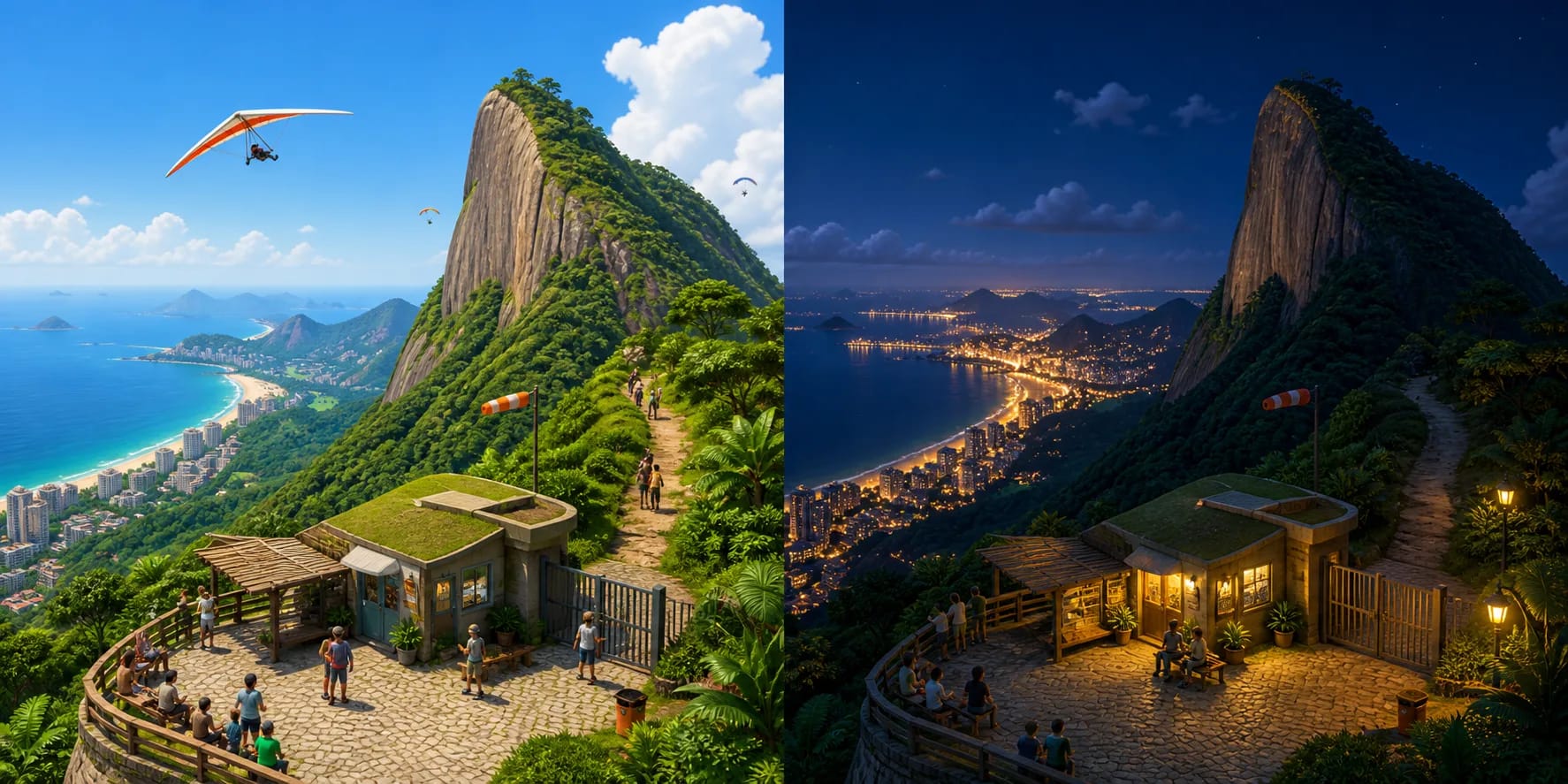
Rio is a city of relief: hills, massifs and monoliths divide the neighbourhoods and create dozens of high points open to the public. Beyond Christ the Redeemer and Sugarloaf, which charge admission, there is a network of free viewpoints delivering comparable views — and nearly empty by comparison.

Quick answer
The best free viewpoints in Rio are Mirante Dona Marta, with the classic south-zone view, Vista Chinesa and Mesa do Imperador inside Tijuca Forest, Parque das Ruínas in Santa Teresa, the Arpoador at sunset and the Mirante do Leblon. All you pay for is getting there; the paid pair, Corcovado and Sugarloaf, need tickets bought in advance.
Mirante Dona Marta: the postcard view
Mirante Dona Marta sits atop Morro Dona Marta inside Tijuca National Park and delivers the city's most recognisable framing: Botafogo in the foreground, Sugarloaf to the right, the mouth of the bay and Niterói behind. It is free and reachable by car or app on the road up from Cosme Velho.
Because there is no public transport to the viewpoint, most visitors arrive on an organised tour or by app — arrange your way back before going up, since car coverage at the top is patchy. The best times are early morning, with light falling across the bay, or late afternoon.
Vista Chinesa and Mesa do Imperador
Vista Chinesa is a pavilion on the Estrada da Vista Chinesa in Tijuca National Park, known for views towards the Lagoa and south zone. Confirm the current road access and permitted mode of travel before choosing an approach.
Mesa do Imperador is another viewpoint in this part of the park. Their proximity on a map does not establish that you can drive between them on your date. Check the park’s notices, gate hours and the return route before combining stops.
- Vista Chinesa: historic pavilion over the Lagoa.
- Mesa do Imperador: quick stop on the same road.
- Combine both with Tijuca Forest in one day.
Urban and free viewpoints
The Arpoador is the easiest of all: street level, free and in the middle of the south zone, looking out to Ipanema, the Dois Irmãos peaks and Pedra da Gávea at sunset. The Mirante do Leblon, at the far end of that beach, shows the shoreline in the opposite direction and works best early in the morning.
In Santa Teresa, the Parque das Ruínas offers an open view of the centre, the bay and Sugarloaf from the preserved shell of an early twentieth-century mansion. It is free, has a café and sits beside the Museu da Chácara do Céu — the viewpoint with the best cultural context in the city.
The paid viewpoints and when the queue is worth it
Corcovado gives a higher perspective with the statue itself as part of the visit; Sugarloaf offers views closer to the bay entrance and a cable-car journey. Decide which experience matters to you before comparing tickets.
Both depend on visibility for the panorama. A free viewpoint can also be cloud-covered, so changing destination does not guarantee a clear view. Check conditions and the operator’s change policy; choose an indoor alternative when travelling and access remain appropriate.
How to plan a day of viewpoints
Give priority to the view you most want and check visibility close to the visit. Cloud can affect a summit while the beach below remains clear. Leave enough flexibility to change the day where the ticket policy permits.
Organise transport for the actual permitted route, including the return. Avoid assuming Dona Marta, Vista Chinesa and Mesa do Imperador form one unrestricted drive. Waterfront viewpoints can be separate outings with shorter approaches, depending on the exact viewing point.
Views without a mountain hike: check the final approach
Separate the view you want from the effort needed to reach it. A promenade offers a different experience from an exposed rock, even when both appear under the name Arpoador. For limited mobility, ask about the route from the drop-off point to the viewing area, including steps, uneven surfaces and places to rest.
Do the same for paid attractions: a vehicle reaching an entrance does not establish step-free access throughout the visit. Compare the detailed Sugarloaf guide with a shorter waterfront outing. Describe your actual needs when contacting a venue rather than relying on a general accessible label.
Sunrise and sunset photographs depend on access hours
Check the gate hours for the exact viewpoint before choosing a photographic time. Sunrise can be before opening and sunset can leave too little time to reach the exit. An attractive photograph online may have been taken under access conditions that do not apply to your visit.
Choose one priority view and allow time to get there, wait for light and return. Confirm the road and permitted transport with the park before combining forest viewpoints. If cloud blocks the panorama, nearby streets or a cultural stop can make a better alternative than racing between distant summits.
Frequently asked questions
- What is the best free viewpoint in Rio de Janeiro?
Mirante Dona Marta, on Morro Dona Marta, gives the most complete view of the south zone and the mouth of the bay without an admission charge. For something simple at city level, the Arpoador at the end of the afternoon is hard to beat.
- How do you get to Vista Chinesa?
Check Tijuca National Park’s current road restrictions and permitted transport before planning the route to Vista Chinesa. Confirm gate hours and the return journey; do not assume a car or app can use every forest road on your date.
- Christ the Redeemer or Sugarloaf — which is better?
They are different views: Corcovado shows the city from high and far, Sugarloaf shows the mouth of the bay from closer and lower. If you can only pick one, decide by the forecast — whichever has better visibility on the day is the one worth the ticket.
- Can I visit every Rio viewpoint at sunrise?
No. Park gates and individual venues have their own access hours and restrictions. Check the specific location before arranging transport, and plan both entry and exit within the published rules.
Sources to check before you go
Opening hours, events and visiting conditions change. These are the official references used when reviewing this guide.