A free editorial guide from riodejaneiro.app. Use it to build your itinerary; Rio Pulse’s personalised plans are still in development.
Bars on one side of the cove, a quiet sea wall on the other
Botafogo and Urca: what to do, where to eat and why to stay in Botafogo
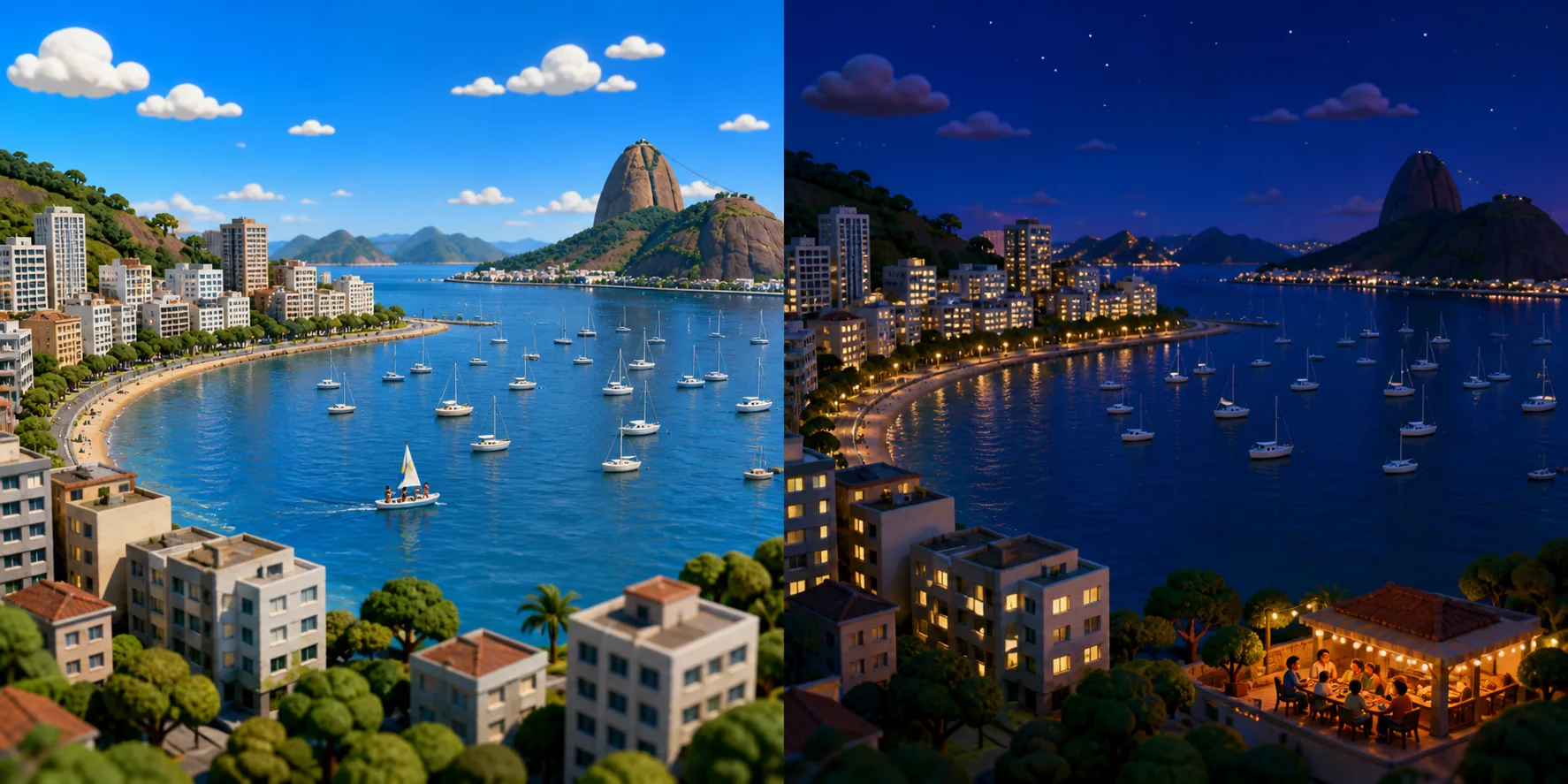
Botafogo and Urca face each other across the same curve of Guanabara Bay, but they work very differently. Botafogo is a busy, practical neighbourhood of bars, cinemas and metro connections; Urca is a small, residential enclave at the foot of Sugarloaf where the main activity is sitting on a sea wall. Together they make one of the easiest half-days in the south zone.
Quick answer
Botafogo is best for food, bars, cinemas and transport: it has a metro station on Lines 1 and 2, the Cobal do Humaitá market and a dense bar scene along Rua Voluntários da Pátria. Its beach is a view of the cove, not a place to swim. Urca, a short walk or bus ride away, offers the Mureta da Urca sea wall at sunset, Praia Vermelha, the Pista Cláudio Coutinho path and the Sugarloaf cable car.
Botafogo and Urca at a glance
Botafogo is a large, lived-in neighbourhood that stretches from the bayfront inland towards Humaitá and the foot of Corcovado. Most of its life happens away from the water, on streets such as Voluntários da Pátria, São Clemente and the smaller roads between them. It is where many residents of the south zone go to eat, drink and see a film, and it rarely feels built for visitors, which is a large part of its appeal.
Urca sits on the small peninsula at the eastern end of Botafogo Cove, squeezed between the bay, Morro da Urca and Sugarloaf. It has low houses, few through roads and a noticeably slower pace. There are no big hotels or nightlife strips; people come for the Sugarloaf cable car, the sea wall and Praia Vermelha. Read the two as a pair: Botafogo for the evening and connections, Urca for the late afternoon and the view.
Botafogo’s bars, Cobal do Humaitá and where to eat
Rua Voluntários da Pátria and the streets around it hold one of the densest mixes of bars and restaurants in the city: traditional botecos with draught beer, newer craft-beer bars, small restaurants and places that fill the pavement with tables after dark. Weeknights can be as lively as weekends. Opening days and times change often, so check a place’s own channels before crossing the city for a specific bar.
Cobal do Humaitá is a municipal market at the Humaitá end of Botafogo where fruit and vegetable stalls share space with bars and restaurants under covered areas. It works well for a relaxed lunch or an informal evening, particularly with a group. For a broader view of the city’s eating scene, see the where to eat guide, and remember that Botafogo’s bars keep going well into the night.
- Voluntários da Pátria and nearby streets: botecos, craft beer and pavement tables.
- Cobal do Humaitá: market stalls by day, bars and restaurants into the evening.
- Check opening days on each venue’s own channels; they change frequently.
The cove view, Mirante Dona Marta, Casa de Rui Barbosa and cinemas
Botafogo Beach is best understood as a viewpoint. From the promenade you see moored boats, the cove and Sugarloaf rising behind Urca — one of the classic Rio postcard angles. The water is part of Guanabara Bay and is not generally a swimming beach; if you are tempted, check the state environment agency’s bathing bulletins first. Mirante Dona Marta, higher up on the Corcovado side, gives a wider version of the same view; it is reached by road rather than on foot from Botafogo, so arrange transport and check current access conditions.
On Rua São Clemente, the Casa de Rui Barbosa is the former home of the jurist and statesman Rui Barbosa, preserved as a museum with a garden and run by a federal foundation. Check the foundation’s website for current opening times and which areas are open. Botafogo is also one of the best parts of the south zone for cinema, with arthouse screens along Voluntários da Pátria and multiplexes in the shopping centres, which makes it a strong option for a rainy afternoon.
Urca’s sea wall at sunset
The Mureta da Urca is a low wall running along the bay side of Urca, where people sit with a drink and look back across Botafogo Cove towards the city and Corcovado. Late afternoon is the classic time: the light softens over the water and the wall fills with residents, couples and small groups. Bars across the road sell drinks and snacks to take to the wall, and the whole scene is informal and unhurried.
Treat it as a neighbourhood ritual rather than an attraction. Weekends and holidays get busy, and the pavement narrows, so keep an eye on bags and phones as you would anywhere in the city. Urca is residential, so noise and behaviour matter here more than in a nightlife district. If you want more places for the golden hour, the viewpoints guide compares other sunset spots.
Praia Vermelha, Pista Cláudio Coutinho and the Sugarloaf base
Praia Vermelha is a short beach tucked between Morro da Urca and the Babilônia hill, right beside Praça General Tibúrcio, where the Sugarloaf cable car starts. It is more sheltered than the open-ocean beaches and has a relaxed, local feel, though water quality varies like anywhere around the bay mouth. The square has kiosks and benches, and it is an easy place to wait for friends or recover after the cable car.
From the same square, the Pista Cláudio Coutinho is a paved path of about 1.25 km along the base of the hills, between rock and sea, popular with walkers and runners. The path gives access to the Morro da Urca trail, which some people climb instead of taking the first cable-car stage. The city publishes opening hours for both; confirm them before you go, and see the hikes guide for difficulty and what to bring.
- Praia Vermelha: small, sheltered beach beside the cable-car station.
- Pista Cláudio Coutinho: flat seaside path of roughly 1.25 km with set opening hours.
- Morro da Urca trail: starts from the path; check current hours and conditions.
A walking route between the two, and how to spend the evening
A simple route starts at Botafogo metro station, heads down to the bayfront and follows the promenade around the cove towards Urca, then continues along Avenida Pasteur to Praça General Tibúrcio. Allow roughly 45 minutes at a relaxed pace, longer with photo stops. The walk is flat, but much of it is exposed to sun, so bring water and avoid the hottest part of the day. Buses along the bayfront are an alternative for the tired.
A comfortable order is Botafogo or Praia Vermelha in the afternoon, the cable car or the Pista Cláudio Coutinho before closing time, the Mureta da Urca at sunset, and dinner back in Botafogo. Returning to Botafogo after dark by taxi or app is usually simpler than walking the long bayfront stretch. Check the getting around guide for buses and apps.
- Start: Botafogo metro station, then the bayfront promenade.
- Middle: Avenida Pasteur into Urca and Praça General Tibúrcio.
- Finish: Mureta da Urca at sunset, then dinner in Botafogo.
- Return after dark by taxi or app rather than on foot.
Staying in Botafogo: metro access and value compared with Copacabana
Botafogo is a practical base for anyone who plans to move around. The metro station serves both Line 1 and Line 2, so the centre, Copacabana and Ipanema are a short ride away, and the neighbourhood has supermarkets, pharmacies and restaurants on almost every block. Accommodation is mostly small hotels, hostels and apartment rentals rather than big beachfront hotels, and prices often compare well with similar standards in Copacabana, though that varies by season and exact street.
The trade-off is the beach: you will need a metro or bus ride to swim in the ocean. Urca has very little accommodation and fewer transport options, which suits people who want quiet more than convenience. Before booking in either, look at the actual walk from the door to the metro or bus stop, and check the safety guide for general precautions at night.
- Botafogo: metro Lines 1 and 2, services everywhere, no swimming beach.
- Urca: quiet and scenic, but little accommodation and fewer transport links.
- Compare the real walk from your door to the station before booking.
Frequently asked questions
- Can you swim at Botafogo Beach?
Botafogo Beach is part of Guanabara Bay and is generally treated as a place to look at rather than swim. Water quality in the bay is variable, so check the state environment agency’s bathing bulletins. For swimming, most people head to the ocean beaches of Copacabana or Ipanema instead.
- Is Botafogo a good place to stay in Rio?
Yes, for travellers who value transport and food over a beach on the doorstep. The metro station serves Lines 1 and 2, there are many bars and restaurants, and accommodation often costs less than a comparable place in Copacabana. You will need a short ride to reach the ocean beaches.
- What is there to do in Urca?
Sit on the Mureta da Urca sea wall at sunset, visit Praia Vermelha, walk the Pista Cláudio Coutinho path along the base of the hills, climb the Morro da Urca trail or take the Sugarloaf cable car. It is a quiet, residential area, so the pace is slow.
- Can you walk from Botafogo to Urca?
Yes. From Botafogo metro station you can follow the bayfront promenade around the cove and continue along Avenida Pasteur into Urca. Allow roughly 45 minutes on flat ground, bring water, and consider a taxi, app or bus for the return after dark.
- When is the best time to visit the Mureta da Urca?
Late afternoon into sunset, when the light over Botafogo Cove is softest and the wall fills with people. Weekends and holidays are busiest. Arrive a little early to find space, and keep an eye on your belongings when it gets crowded.
Sources to check before you go
Opening hours, events and visiting conditions change. These are the official references used when reviewing this guide.