A free editorial guide from riodejaneiro.app. Use it to build your itinerary; Rio Pulse’s personalised plans are still in development.
The backup plan that usually becomes the main one
Museums in Rio de Janeiro: which are worth it and how to group them
Rio's museums cluster in two walkable areas: the historic centre and the port district. Which means a rainy day can become one of the best days of the trip, as long as you pick addresses by proximity rather than by a list of the most famous.
Quick answer
In the port district, the Museum of Tomorrow and the Museu de Arte do Rio sit side by side on Praça Mauá. In the centre, the Museu Histórico Nacional, the Centro Cultural Banco do Brasil and the Real Gabinete Português de Leitura are a few blocks apart. In Flamengo, the Museum of Modern Art sits inside the waterfront park. Check closing days — many shut on Mondays.
Praça Mauá: Museum of Tomorrow and MAR
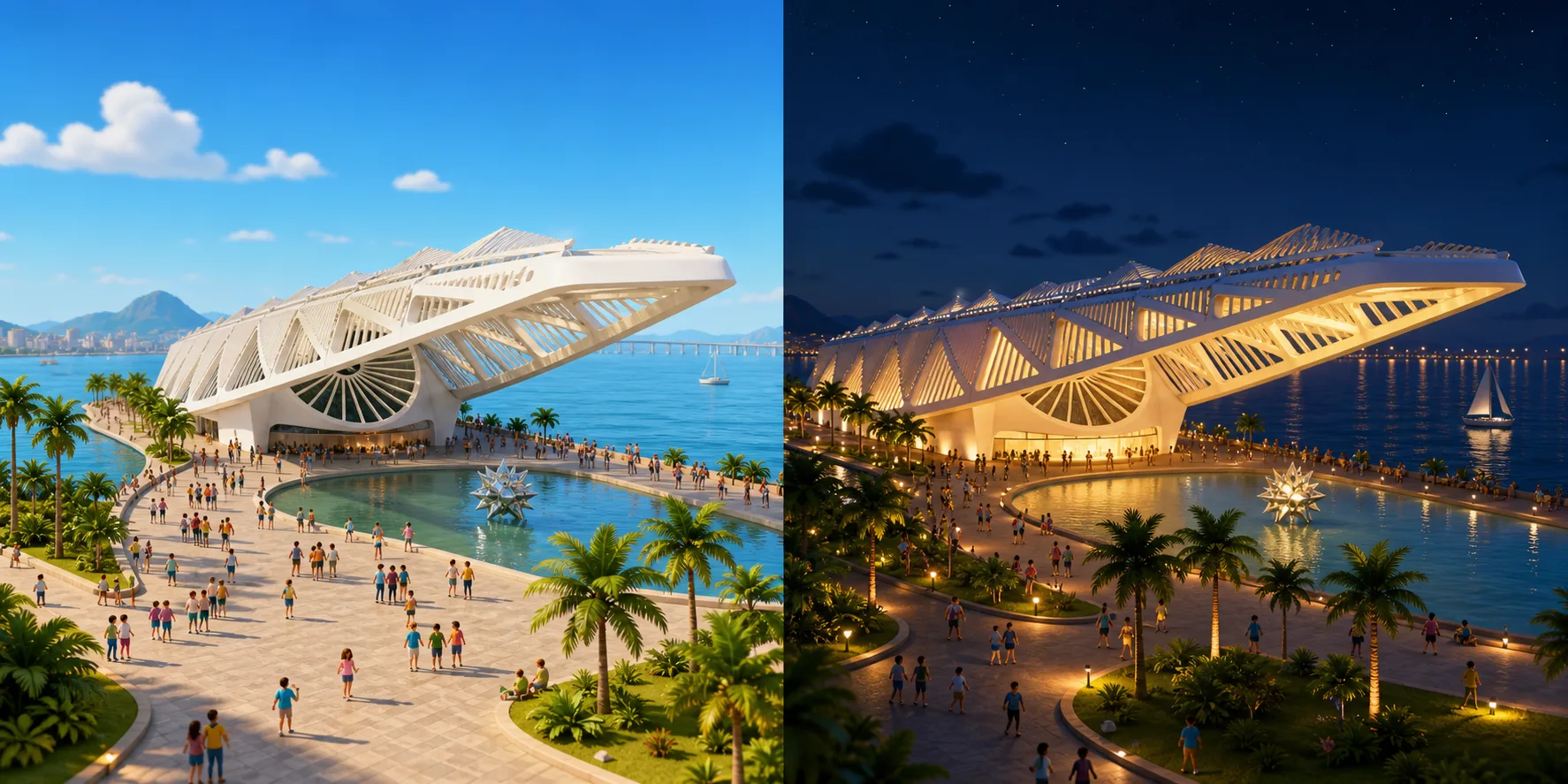
The Museum of Tomorrow, designed by Santiago Calatrava and opened in 2015, is a museum of applied science dealing with sustainability, climate change and possible futures. The experience is sensory and interactive, works well with teenagers and takes about two hours. The building, on the Píer Mauá, is an attraction in itself.
Across Praça Mauá, the Museu de Arte do Rio presents art and the city’s visual and social history in connected buildings. These two museums can anchor a compact port-area outing. The Etnias mural is a separate stop farther along the waterfront; it is not between the museum entrances.
- Museum of Tomorrow: science, futures and landmark architecture.
- MAR: art and city history across two buildings.
- Etnias mural: an optional separate waterfront walk.
Historic centre: collections, architecture and a library
The Museu Histórico Nacional, housed in a complex of fortifications and colonial buildings near Praça XV, holds one of the largest collections of Brazilian history, including notable numismatics and furniture. The Centro Cultural Banco do Brasil occupies a 1906 bank building and usually hosts the city's big temporary exhibitions.
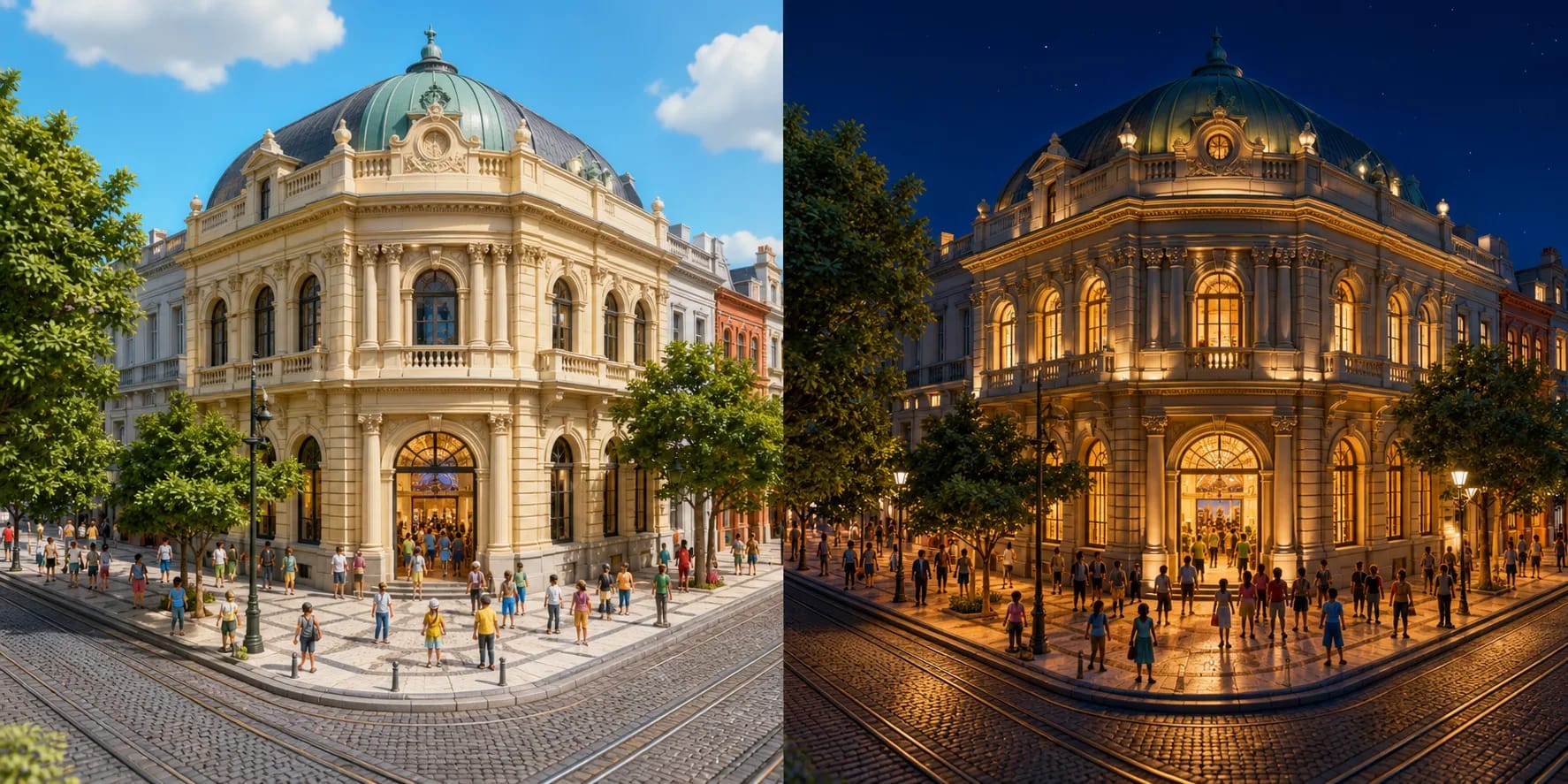
A few blocks away, the Real Gabinete Português de Leitura is not a museum, but it is the most striking architectural stop in the centre: a nineteenth-century neo-Manueline hall with timber shelving to the ceiling and a stained-glass skylight. Entry is free, the visit is short and the queue usually moves fast.
South zone and the rest of the city
The Museum of Modern Art sits in the Flamengo waterfront park, in a modernist building by Affonso Eduardo Reidy surrounded by Burle Marx gardens, with a collection of Brazilian art and a cinema programme. It is the easiest museum to fit into a south-zone itinerary, between Botafogo and the centre.
Away from the main axis, the Museu Nacional in São Cristóvão occupies the former imperial palace at Quinta da Boa Vista and is undergoing a long reconstruction after the 2018 fire, reopening in phases. In Barra, the Museu Casa do Pontal holds the largest collection of Brazilian folk art. In both cases, confirm what is open before planning the trip.
How to build a museum day
The rule is to group by area, never by theme. A well-built day does Praça Mauá in the morning, eats lunch in the centre and uses the afternoon on two or three addresses on foot, with the VLT tram covering the longer hops. Trying to add the port district, the centre and Flamengo in one day spends more time travelling than looking.
Monday is the most common closing day among Brazilian museums, and many open Tuesday to Sunday only. Several require online booking even when entry is free. Check each institution's official site the day before: temporary exhibitions, building works and changed hours are frequent.
The rainy-day route that works
For ordinary rain, choose one museum and a nearby meal, checking opening and tickets first. Paths between institutions are not necessarily covered. Use a shorter route and check transport notices rather than assuming a whole Centro-and-port circuit will work in heavy rain.
Botafogo offers a different plan around a cinema, café or restaurant. Confirm the actual address and the walk from the station. If severe weather disrupts travel, postpone the outing; choosing an indoor activity does not make the journey independent of weather.
Choose the exhibition, not only the famous building
Before comparing museums, read what is actually on display during your trip. A building you recognise from photographs may have temporary closures, a changed collection or several activities with separate tickets. Match the subject to your interests: science, Brazilian history, visual art and a historic reading room offer very different visits.
Check whether interpretation is available in a language your group reads and whether a guided activity needs another booking. With children, look for age guidance and the expected format rather than assuming every interactive exhibition is suitable for every age. Choose one priority before adding a second institution.
A rainy-day museum plan with fewer transfers
Start with the museum you most want to see, then choose lunch and a second optional stop nearby. Praça Mauá can anchor a port-area day; a venue in the historic centre can anchor a different route. Do not assume all paths between buildings are covered or that public transport is unaffected by heavy rain.
Check the forecast and operational alerts before travelling, and shorten the route when conditions worsen. Keep ticket confirmations and the return station handy. If the aim is a low-cost day, the free-attractions guide explains why free entry and reservation requirements are separate questions.
Frequently asked questions
- What is the best museum in Rio de Janeiro?
It depends on your interest: the Museum of Tomorrow is the most impressive in experience and architecture, the Museu Histórico Nacional has the most complete Brazilian history collection, and MAR deals specifically with the city. The first two of those sit side by side on Praça Mauá.
- Are museums in Rio open on Mondays?
Generally not. Monday is the most common closing day, and many institutions run Tuesday to Sunday. Some also require online booking even with free entry, so confirm on the official site the day before.
- What can you do in Rio de Janeiro when it rains?
Concentrate the day on the historic centre and the port district, where museums, cultural centres and the Real Gabinete sit within a few blocks and the VLT links everything. Botafogo, with cinemas and restaurants, is the lighter alternative.
- Can I leave my suitcase at a Rio museum while sightseeing?
Do not assume a museum cloakroom accepts travel luggage. Check size limits and storage rules with the venue before arriving. Leaving bags at your accommodation, if that service is available, may make the day easier.
Sources to check before you go
Opening hours, events and visiting conditions change. These are the official references used when reviewing this guide.